£93K to £336K in 4 Months: A UK E-commerce ROAS Case Study

Vishal Arora
Founder, The Marketing Mavericks™ | 6 min read
Over four months, a UK e-commerce brand spent £93K on Google Ads and Meta Ads and generated £336K in sales, a 3.61X blended return on ad spend. Google Ads carried most of the budget and returned 3.66X. Meta Ads ran on a much smaller budget and returned 3.25X. Together they drove more than 8,500 orders. Below are the real numbers from both ad accounts and what they show.
Watch the short version
On this page
The Results at a Glance
The brand sells products online in the UK. We ran Google Ads and Meta Ads together from June to September, and every figure below comes straight from the two ad accounts for that period.
| Channel | Ad spend | Revenue | ROAS | Orders |
|---|---|---|---|---|
| Google Ads | £81.6K | £299K | 3.66X | 7,510 |
| Meta Ads | £11.5K | £37.3K | 3.25X | 1,051 |
| Combined | £93.1K | £336K | 3.61X | 8,561 |
Meta revenue is calculated from spend multiplied by the website purchase ROAS that Meta reports. In Indian rupees, the £336K in sales comes to roughly ₹4.24 crore.
Every channel returned more than three pounds for each pound spent.
Google Ads: £81.6K In, £299K Out
Google Ads took close to 88 percent of the budget and produced about 89 percent of the revenue. That split was deliberate. Search and Shopping catch people who are already looking for the product, so every extra pound on Google was going to buyers who had intent before they saw an ad.
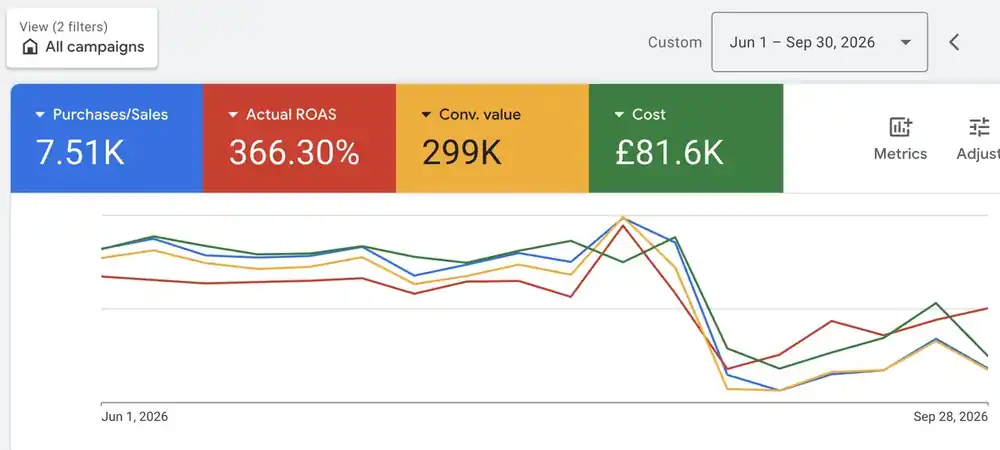
- 7,510 sales at an average cost of about £10.87 each.
- Average order value of roughly £40.
- 3.66X ROAS held across four months, with a steady run through summer, a peak in late August and ROAS climbing again at the end of September.
For product brands, most of this comes down to a clean product feed and a sensible campaign structure. Our guide to Google Shopping ads for e-commerce covers that setup, and conversion tracking is what lets Google bid on real purchase values.
Meta Ads: Small Budget, Strong Return
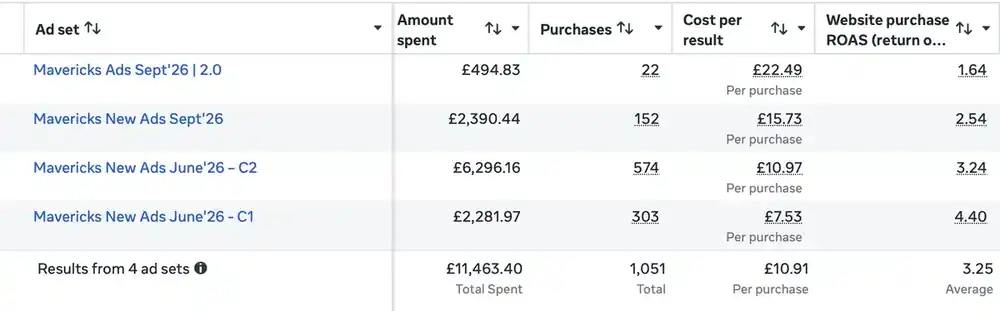
Meta ran on £11.5K, about an eighth of the Google budget, and still delivered 1,051 purchases at £10.91 each. The ad set breakdown shows where that return came from.
| Ad set | Spend | Purchases | Cost per purchase | ROAS |
|---|---|---|---|---|
| June creatives, set 1 | £2,282 | 303 | £7.53 | 4.40X |
| June creatives, set 2 | £6,296 | 574 | £10.97 | 3.24X |
| September creatives | £2,390 | 152 | £15.73 | 2.54X |
| September creatives, round 2 | £495 | 22 | £22.49 | 1.64X |
The June creatives did the heavy lifting. The September sets were still early in testing when the period closed, which is normal: new creative usually starts at a higher cost per purchase before the winners settle. The point is to keep fresh concepts coming in before the proven ones fatigue. See our creative testing framework for how we run that rotation.
The System Behind a 3.61X Blended ROAS
None of this came from one clever campaign. It came from a few basics done properly and kept in place.
Each step feeds the next. Skip one and the return drops.
- Tracking first. Both platforms optimise toward the purchases you report, so purchase events and values have to be right before anything else. On Meta that means the pixel and the Conversions API together.
- Budget follows intent. Google captured existing demand, so it got most of the money. Meta found new buyers on a tighter budget.
- Creative that sells. Ads were judged on cost per purchase, not likes or click-through rate.
- Constant testing. New creative went live before the old sets wore out.
- Scale in steps. Budgets moved up gradually on what was working, which is how ROAS held as spend grew. More on that in scaling Meta Ads without losing ROAS.
What Would 3.61X Mean for Your Brand?
Put in your monthly ad spend and your current ROAS to see the gap.
ROAS on its own does not tell you about profit, so set your target with margins in mind. A brand with healthy margins can scale profitably at a lower ROAS than one with thin margins.
Frequently Asked Questions
What is blended ROAS?
Blended ROAS is total revenue divided by total ad spend across every channel. Here it is £336K divided by £93.1K, which gives 3.61X. It shows the return of the whole ad programme rather than one platform on its own.
Is a 3.61X ROAS good for e-commerce?
For most online stores, yes. Many need somewhere between 2X and 4X to stay profitable, depending on margins and repeat purchase rates. The right target is the one that leaves profit after product, shipping and ad costs.
Should an e-commerce brand start with Google Ads or Meta Ads?
If people already search for your product, Google usually returns faster because it captures existing demand. Meta is stronger for creating demand and reaching new buyers. Most brands do best running both, with budget weighted to whichever returns more.
Spending ₹5 Lakh+ a Month on Ads? Let's Make It Return More.
We run Google Ads and Meta Ads as one system for e-commerce and service brands across the USA, UK, Australia, Canada, the UAE and India. See our Google Ads management and Meta Ads management.
Talk To Our Team →